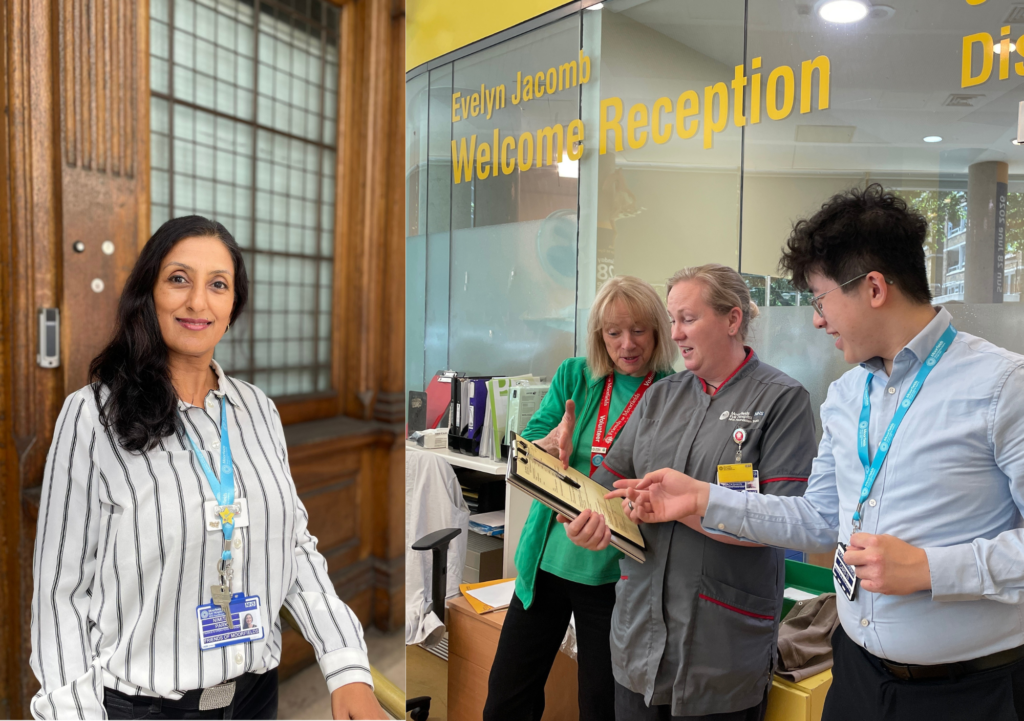
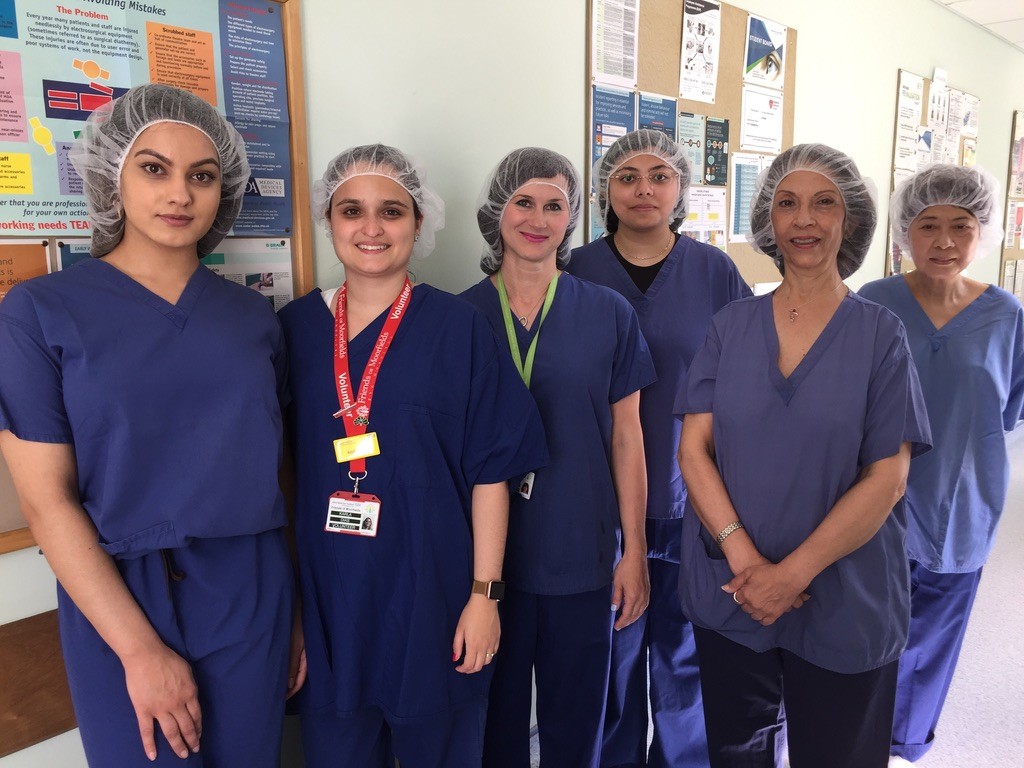
Almost 42% of our volunteer force is made up of people under the age of 25, and our Volunteer to Career programme gives them an invaluable experience at a world-class centre of excellence for eye care, research and education. But not everyone is able to commit to 6 months of volunteering.
We sat down to chat with Nimita, the newly appointed Youth Engagement Manager at Friends, about how we’re going to support even more young people through our work experience programme.
To start things off, can you tell us a bit about the programme?
The work experience programme is a short, 1-to-2-week programme to give young people between 16-to-19 years old a taster of the opportunities in healthcare, and in particular in eye health. It replaces the work experience programme currently ran by Moorfields Eye Hospital.
Their days will consist of 2-to-3-hour slots with different departments, and their experiences will range from shadowing a clinic, department or volunteer at work, to attending presentations/events or group work with medical students, to activities such as research tests in electrophysiology.
We are working closely with Moorfields Eye Hospital, UCL Institute of Ophthalmology, NIHR Moorfields Biomedical Research Centre and the Young Person’s Advisory Group (YPAG) to offer students a varied experience.
The Friends normally focus on patient experience. Why are we introducing a workplace experience programme? And why now?
With the move to Moorfields and UCL Centre for Eye Health in mind, we have an incredible opportunity to find new ways to support communities, including students in our area and beyond.
I’ve got two teenagers myself and I’ve seen them and their friends struggle with career choices. Even if they know which direction they want to go in, they don’t know about all the opportunities out there. And if they do, they can’t find work experience. There are so many closed doors.
It’s tough for young people out there. At Moorfields, we have the chance to change this for the healthcare sector. The workplace programme might not have an instant impact on patient experience, but it will have a direct impact in the long term. We need good staff. What better place to start looking for future colleagues than amongst young people embarking on their career journeys.
There’s a certain buzz around Moorfields. People are kind. And it’s a place where you can grow beyond the role you are hired for. At the age of 16-19, students are taking decisions that lay the foundations of their career path, so it’s a critical age to scout for talent and show them what Moorfields can offer them.
How are staff getting involved in the programme?
Our colleagues are busy. The programme is designed to avoid adding anything extra to their plates. There is no preparation or curriculum design required.
Students are shadowing staff at work, taking part in existing research projects, and coming along to planned talks, group work and events.
Simply observing patient interactions and being immersed in a healthcare environment is already an invaluable experience.
What is your vision for the programme in the long term?
That’s simple: watching students become part of the Moorfields family. It would be amazing to see people go into eye care and perhaps even volunteer with us!
We want to scale the programme. I’ve been approached by many colleagues about opportunities for their children or a young person they know. We currently don’t have the capacity to take on everyone, but as more departments sign up, we can host more students. If work experience isn’t quite right, Friends can be an entry point to connect students up with YPAG initiatives or to get them to consider studying at the UCL Institute of Ophthalmology.
In the long-term, we also intend to expand the programme beyond the focus on medical students. Everyone has a skill and you don’t need to be a medical specialist: Moorfields is for everyone.
Participants will get the word out to students who might not have considered Moorfields and the programme, and through this increase our reach. This will hopefully further increase the demand for the programme and allow us to expand the service to different sites.
Applications for this year’s cohort have now been closed. Keep an eye on our website for more information about future work experience programmes. We will be closely evaluating our next steps but look forward to working with even more departments and colleagues for the next cohort.
Are you a student considering a future in eye care, clinical research, or ophthalmology? The Friends of Moorfields Eye Hospital and the NIHR Moorfields Biomedical Research Centre invite you to take part in our very first essay competition.
The theme is personal reflection. We want to hear what inspires your ambitions for a career in eye health. Whether it is a personal experience, an interesting medical topic, or an inspiring individual, we want to read your story.
Categories
Category 1: Post-graduate students at the Institute of Ophthalmology and early career medics
Category 2: Undergraduate students at the Institute of Ophthalmology and Moorfields Education medical students
Category 3: Student volunteers at Friends of Moorfields considering a future in eye health
The prize
The prize winners will receive a £100 cash prize and the opportunity to attend and present an extract of their essay at the Future of Eye Conference on 17 October 2026.
The requirements
Our expert judging panel is looking for a well-structured, clearly articulated essay of >1,500 words, showcasing your unique point of view, good grammar, and topic understanding. If you use secondary sources, please reference them in APA style. We want your authentic voice, so AI-written essays will not be accepted. Because these are personal reflections, entries will not be published, and it is not compulsory to do a reading at the prize giving.
Key dates and information
Entries open in June and close on Friday 4 September 2026.Email your entry to moorfields.friends@nhs.net. Please use the exact subject line format [Category] [Your name] Essay Submission.
We look forward to reading your unique stories!
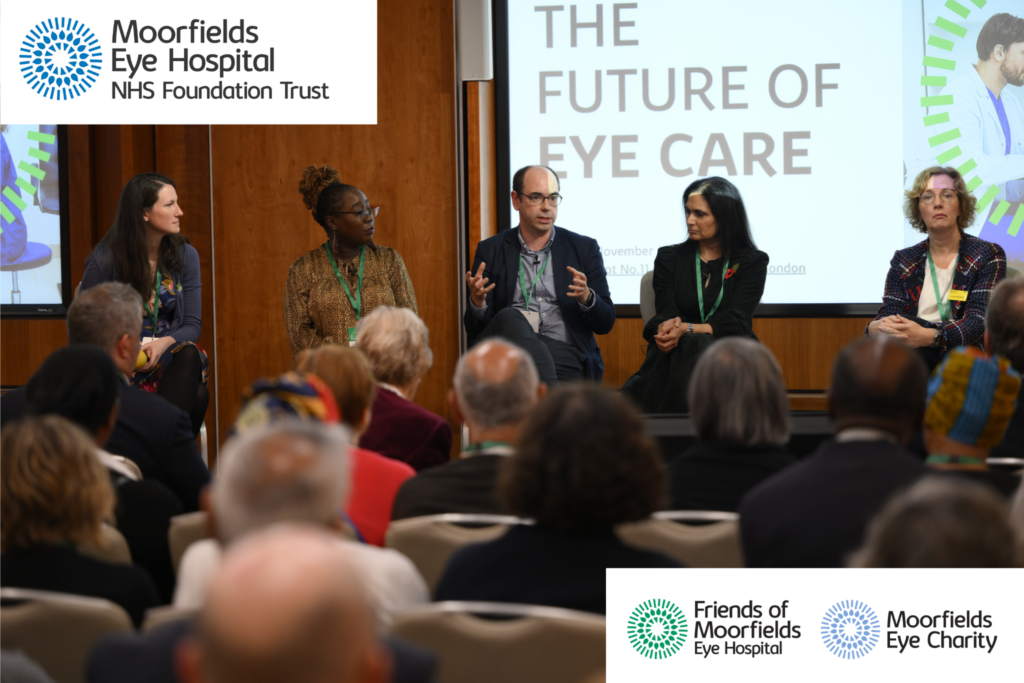
Save the date: the Future of Eye Care Conference is returning on Saturday 17 October!
This year, Moorfields Eye Hospital, Friends of Moorfields and Moorfields Eye Charity are partnering to bring you up to speed about the latest in research, technological innovation and other progress in eye care at Moorfields and beyond.
Prepare for a day filled with expert talks, panel discussions and an exciting exhibition space with innovative products and services for people with sight problems.
Tickets will be available soon. Keep checking our website or follow us on social media for updates on speakers and exhibitors.
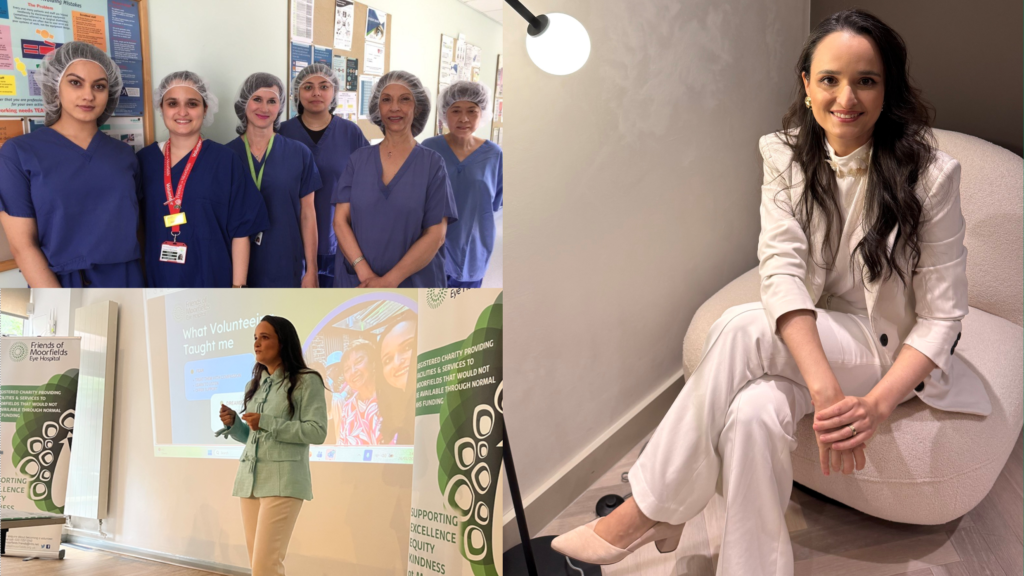
An interview with Dr Karla Dias
When we talk about the future of eye care, we often think about research labs, the latest equipment and brand-new treatments – which are key to progress. But the best breakthroughs are also about people.
The wonderful Dr. Karla Dias has been with Moorfields for 7 years – 1 year as a volunteer and 6 as a doctor. Friends caught up with her about her background, how breakthroughs happen, and the future of eye care at Moorfields.
Can you tell us a little bit about your specialisation in eye care and your journey at Moorfields?
Thank you very much for inviting me. It’s always a pleasure to speak with the Friends! I’m an ophthalmologist with a particular interest in complex anterior segment disease and structural complications. My work focuses on patients whose eyes have lost their normal pressure and structural integrity. This can happen after surgery, inflammation or eye trauma.
My journey at Moorfields has been deeply formative. It began not only as a clinician, but also as a volunteer. As a volunteer I started with welcoming patients at the front. I would help them check in, guide them, and be there for them if they had questions.
“This experience shaped the type of doctor I am today.”
When you sit next to a patient as a volunteer, you hear different things about their fears of losing independence, their frustrations, and their hopes that someone might look at their case differently. And that perspective has always stayed with me.
At Moorfields, we work at this intersection of clinical excellence, research and compassion. I’m very grateful to have always been given the time to talk to patients, even when I’m in a very busy clinic.
Your relationship with Friends has recently gone full circle, as you are part of the team that was on the news about a new treatment funded by Moorfields Eye Charity, which Angela Smith, our chief executive, received as well. What is hypotony and how does the treatment help patients like Angela?
It’s been a great pleasure to be able to treat her! Hypotony is a condition in which the pressure inside of the eye becomes abnormally low. When this happens, the eye can collapse structurally, leading to distorted vision, changes in the retina, discomfort, and in severe cases, irreversible sight loss.
Low eye pressure is not just a number for many patients. It means blurred vision, fluctuation in the vision, difficulty reading, driving, recognising faces, and dealing with the emotional impact of limited options.
The treatment we developed involves injections inside of the eye with a gel-like substance that provides internal structural support. Rather than trying to increase the pressure by injecting liquid in the front part of the eye, this approach focuses on restoring the eye’s architecture from within, which can ultimately improve visual function.
“For patients like Angela, it represents a shift from ‘there is nothing that we can do’ to ‘there may be a way to help’.”
Can you talk a bit more about how the treatment came about?
Innovation begins with listening carefully to what’s not working. Conventional hypotony treatments aim to correct underlying causes. However, in some patients the eye’s structure remains unstable.
“When patients continue to have hope and ask whether there is another possibility, it challenges us as clinicians to look beyond established pathways. Innovation is often co-created with patients.”
The HPMC gel we use actually has long been used safely in ophthalmology, but the idea to use the gel to treat hypotony emerged from listening to a patient who was losing her vision. Mr. Petrushkin wanted to try everything he could to stop this from happening.
What role does addressing unmet needs, and the effort around rare diseases, play in driving innovation?
Rare and underrepresented conditions often receive less attention in research because they affect smaller populations. Yet for an individual patient, the impact is profound. When there is no treatment, no trial and limited literature, we must think more creatively and more collaboratively as clinicians.
At Moorfields, we work as a team: with patients, multiple clinics and different consultants and colleagues, who always have something to add. I’m respected for being unique and Mr. Petrushkin is respected for having his ideas.
“Being a voice for the patient that no one talks about means recognising that equity is not only about access. Equity is about ensuring that uncommon conditions are not dismissed and unsolvable simply because they are uncommon.”
Historically, some of the most transformative medicine began with rarer and challenging cases that forced us to think differently. When we allow lived experience to guide research priorities, innovation becomes concrete and purposeful.
The hypotony treatment is a good example. It began with a relatively small number of patients with a significant unmet need. But once you explore a solution, its principles may extend to broader applications.
If you had to name one thing, what excites you most about innovation at Moorfields?
If I had to put it into one word, it’s ‘mindset’. At Moorfields, there is a culture that allows clinicians and scientists to question assumptions. This environment, together with the exceptional research infrastructure, multidisciplinary collaboration, and many incredible people working here, creates the space for meaningful change.
“Kindness and innovation are not separate concepts. The future of eye care is not only about new devices and molecules; it’s about the human drive to change the outcomes for patients who feel forgotten or unseen.”
That moment that the patient who has been told for years ‘that nothing can be done’, hears ‘there may be something we can try’, that’s when true progress starts.
If you would like to listen to the full interview, please access the recording here.